

Limestone floor restoration
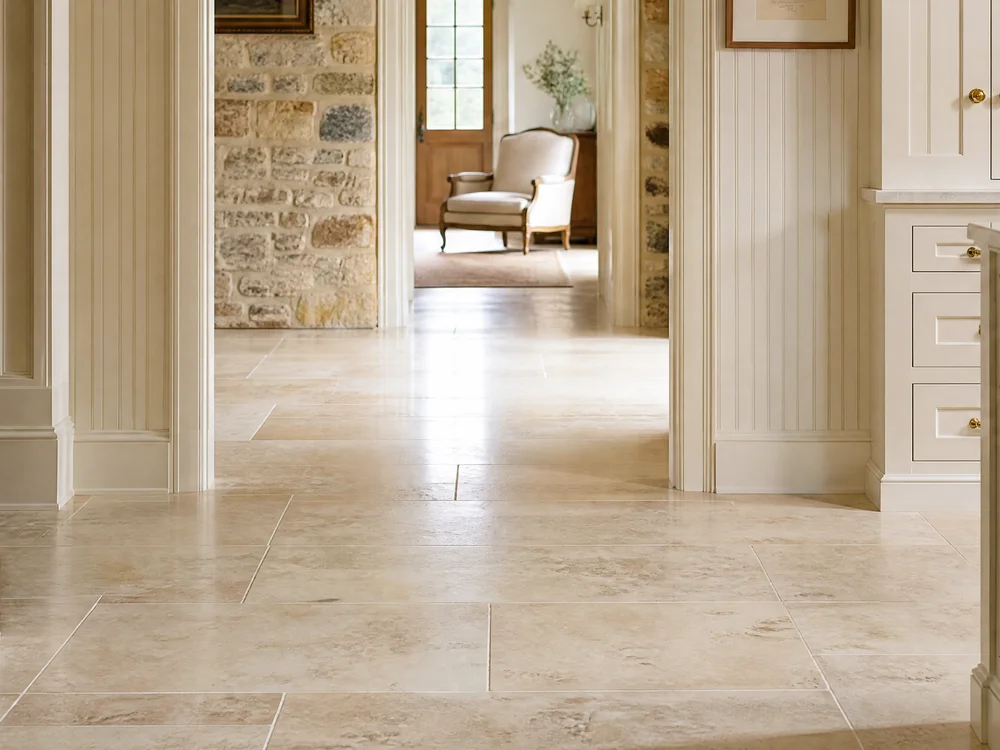
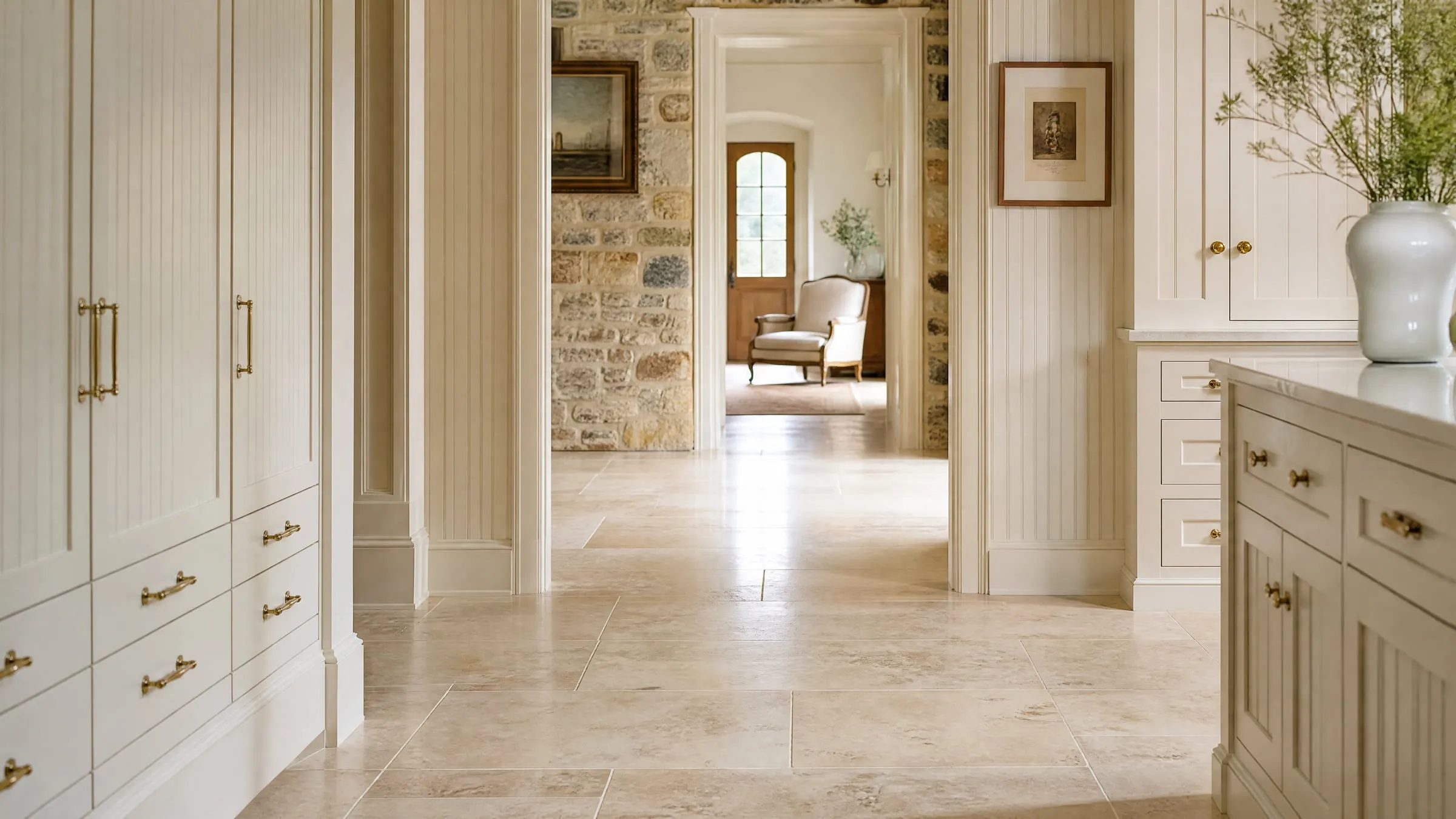
E2E provides limestone floor restoration for homeowners whose floors show wear, etching or an uneven appearance. We tailor the corrective scope to your existing limestone, its condition and the finish you want.
Request a walkthrough to discuss the worn areas and what you would like to change.
Request a walkthrough
“The kitchen floor looks dull” is a useful starting point.
Request sent
Thank you. We'll contact you to set up a time to walk the floor together.
MADE IN TAMPA
Part of E2E Cleaning Services, a Tampa company


Read the marks before choosing the work
A pale patch, a dark area and a worn walking route can have different causes. Limestone is commonly acid-sensitive. An acidic spill can etch the surface, changing its appearance even when there is nothing left to wipe away. Discoloration may instead involve staining, and surface residue can make a floor look uneven without being the same kind of damage.
Restoration considers those differences together. Tell us where the change appeared, whether ordinary cleaning affects it and what you know about previous floor work. You do not need to identify the stone variety or diagnose each mark before contacting us.
The limestone floor-care overview explains the wider care options, including situations where a narrower service may be appropriate.
Keep the stone's character in the decision
Limestone varies in composition, texture and existing finish. A softer-looking floor may already have the appearance you want, with only certain worn areas needing attention. Another homeowner may want to discuss changing the level of reflection.
Those goals call for different conversations. The aim is to agree on a suitable finish for your particular floor, including how treated areas will relate to adjoining limestone. A natural variation in the stone should not automatically be treated as damage that needs correction.
For a finish-focused request, see limestone floor honing and polishing. Honing concerns a lower-reflection appearance; polishing suitability varies with the limestone. Restoration addresses the broader condition of the floor rather than using shine as the measure of every result.
Our process
What the restoration scope covers
We begin with an initial walkthrough to review the stone, existing finish and areas of concern. We agree on the corrective scope and intended appearance before work begins. Some limestone will not take the high reflection associated with polished marble, and existing stains or deeper damage may limit the result. Sealing, where appropriate, concerns stain resistance; it does not prevent acid etching or determine the floor's sheen.
At completion, we review the work with you for customer signoff. We address issues identified within the agreed scope before considering the job complete.
Questions about limestone floor restoration
Can I keep the floor's subdued appearance?
Yes. Explain that preserving the existing lower-reflection look is your priority. Restoration does not automatically mean changing your limestone to a glossy finish.
Is a pale spill mark always a stain?
No. It may be etching, particularly after contact with an acidic substance. A single spill can also cause both etching and staining. Share what happened if you know, rather than assuming repeated cleaning will solve it.
What if I do not know the type of limestone?
Start with the rooms and areas needing attention. Any installation records or details of earlier work can help if you have them. The contact page gives you a place to describe the concern without selecting a restoration method.
Discuss restoration for the limestone floor you have. Request a walkthrough.