


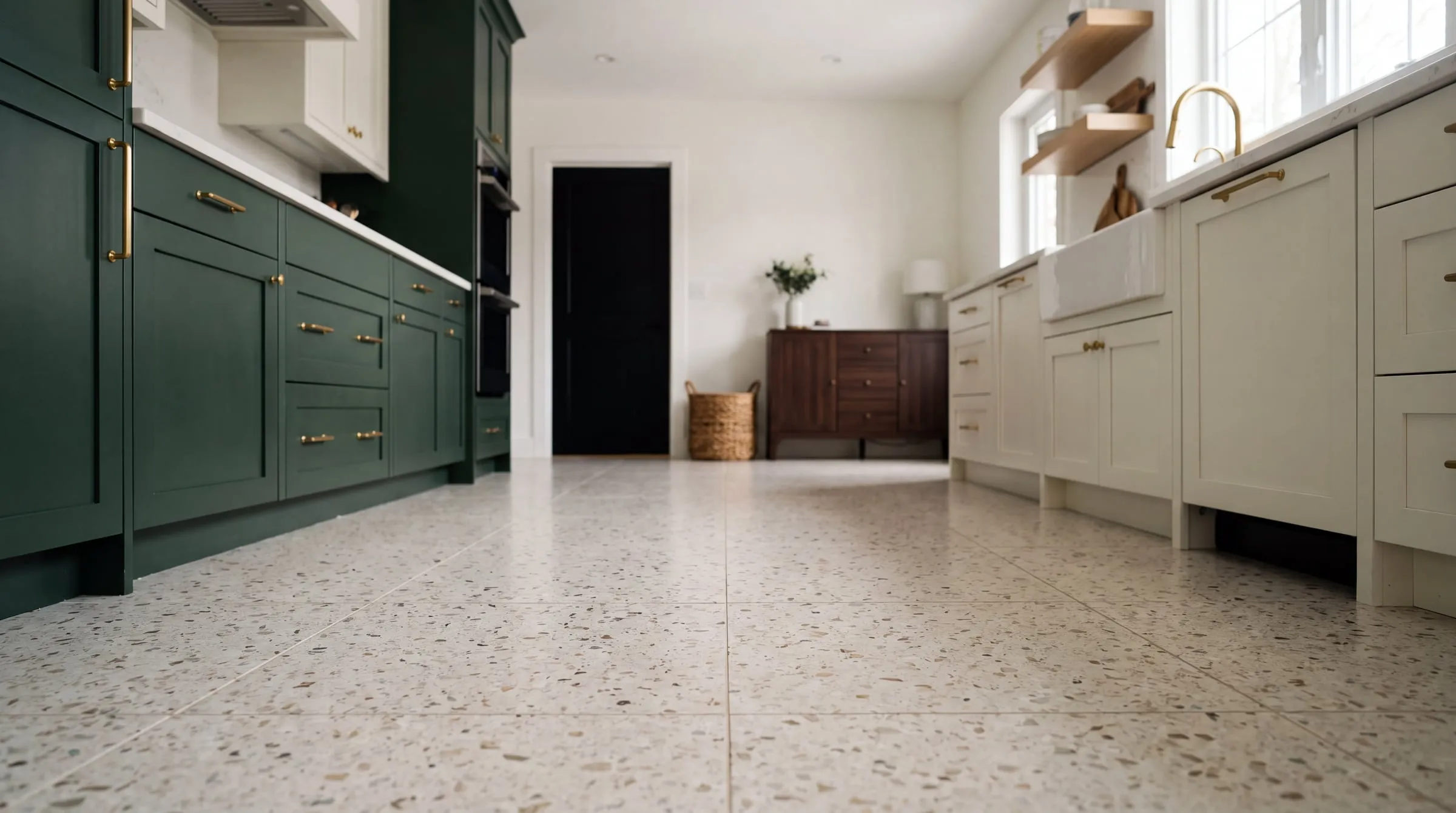


Terrazzo floor care for your home

If your terrazzo floor has worn paths, patchy reflection or marks that stay after cleaning, the next step is to understand the surface before choosing a treatment. E2E provides residential terrazzo restoration, honing, polishing and suitable sealing based on the floor's construction, condition and existing finish.

Not sure it's terrazzo? See every stone we care for

Request a walkthrough

“The kitchen floor looks dull” is a useful starting point.

Submitting a request does not book or authorize work.

We use your details to respond to your request. See our Privacy Policy.

Request sent

Thank you. We'll contact you to set up a time to walk the floor together.

MADE IN TAMPA

Part of E2E Cleaning Services, a Tampa company

Florida SBDC at USF Minority Owned Business of the Year 2024Tampa Bay Chamber member

Choose the service for your terrazzo floor

Tell us what you notice and whether you want to keep the current appearance or discuss a different level of reflection. You don't need to identify the binder or diagnose the damage yourself.

Terrazzo floor polishing
Polishing and suitable honing, with binder and aggregate considered together.
Terrazzo floor restoration
A broader plan for existing wear, discoloration and condition concerns.

Why the binder matters as much as the chips

Terrazzo is aggregate, such as stone chips, held in a binder. It is a floor system, not a slab of quarried natural stone. The binder may be cement-based or epoxy, and that difference affects suitable care and sealing.

Cement-based terrazzo and epoxy terrazzo do not have the same absorption characteristics. Epoxy binder does not absorb liquids in the same way as cement, but the exposed chips and existing finish still matter. Marble chips can still be sensitive to acids even within an epoxy binder. A treatment suitable for one terrazzo floor should not be assumed suitable for another.

Previous surface treatments matter too. A cloudy appearance may involve residue or an existing finish, rather than damage to the terrazzo beneath it. During assessment, we distinguish those possibilities before recommending corrective work.

Work that fits your terrazzo floor

Restoration

Terrazzo restoration starts with the installed system and the problems you want addressed. Worn areas, discoloration and cracks may call for different decisions. Refinishing a surface is a different scope from addressing a damaged area; neither should be assumed to resolve the other.

We discuss what can reasonably improve and what may remain visible. Some stains cannot be fully removed, and existing damage can limit the result. Restoration is an agreed scope, not a promise to return every floor to an unmarked original appearance.
Honing and polishing

Honing is surface refinishing associated with a smooth, lower-reflection appearance. Polishing aims for a more reflective finish where suitable. The choice should reflect your preferred appearance as well as the binder, aggregate and condition of the floor.

A developed polished finish is different from a maintenance dressing on top of the surface. An uneven shine doesn't tell us which treatment is appropriate by itself. We assess the existing finish before discussing the work and intended result, rather than prescribe the same refinishing sequence for every home.

Suitable sealing

Sealing needs to suit the whole terrazzo system. Cement-based binders and epoxy binders cannot share an assumed sealing prescription, and a penetrating stone sealer is not a universal answer for terrazzo.

Suitable sealing can support stain resistance, but it does not make the floor stain-proof or protect acid-sensitive aggregate from etching. Sealer also does not remove a scratch, repair a crack or create a polished finish. A sealing request can be assessed without assuming full restoration is needed.

Cracks and damaged areas

Show us cracks or older patched areas during the walkthrough. Their condition and possible underlying causes need separate consideration before a repair scope is agreed. A patch may remain visible because the original aggregate and appearance can be difficult to match. Cosmetic repair does not stabilize structural movement or guarantee that a crack will never return.

Our process

A walkthrough before work and signoff after

We start by looking at the floor with you and discussing the areas that need attention. Share any history you know, including previous treatments or repairs. The assessment helps define the proposed scope and its limitations, so you can judge the work against what was agreed.

At completion, we walk through the work with you for signoff. Issues identified within the agreed scope are addressed before we consider the job complete.

See our project-photo page for the gallery's current status and guidance on comparing floor-care examples.

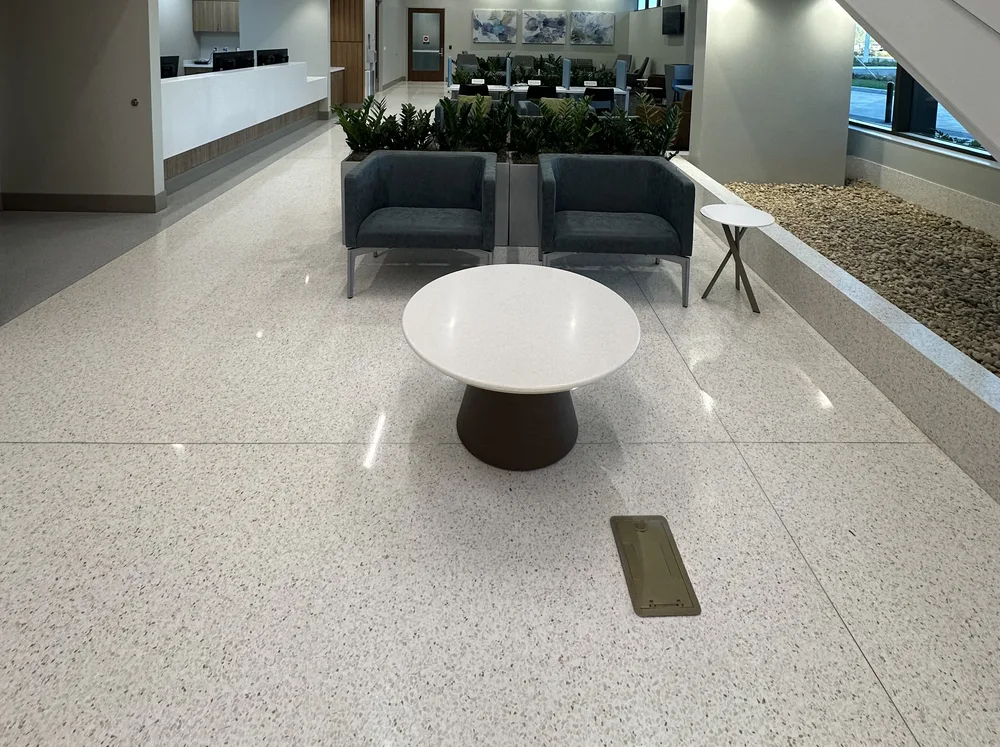
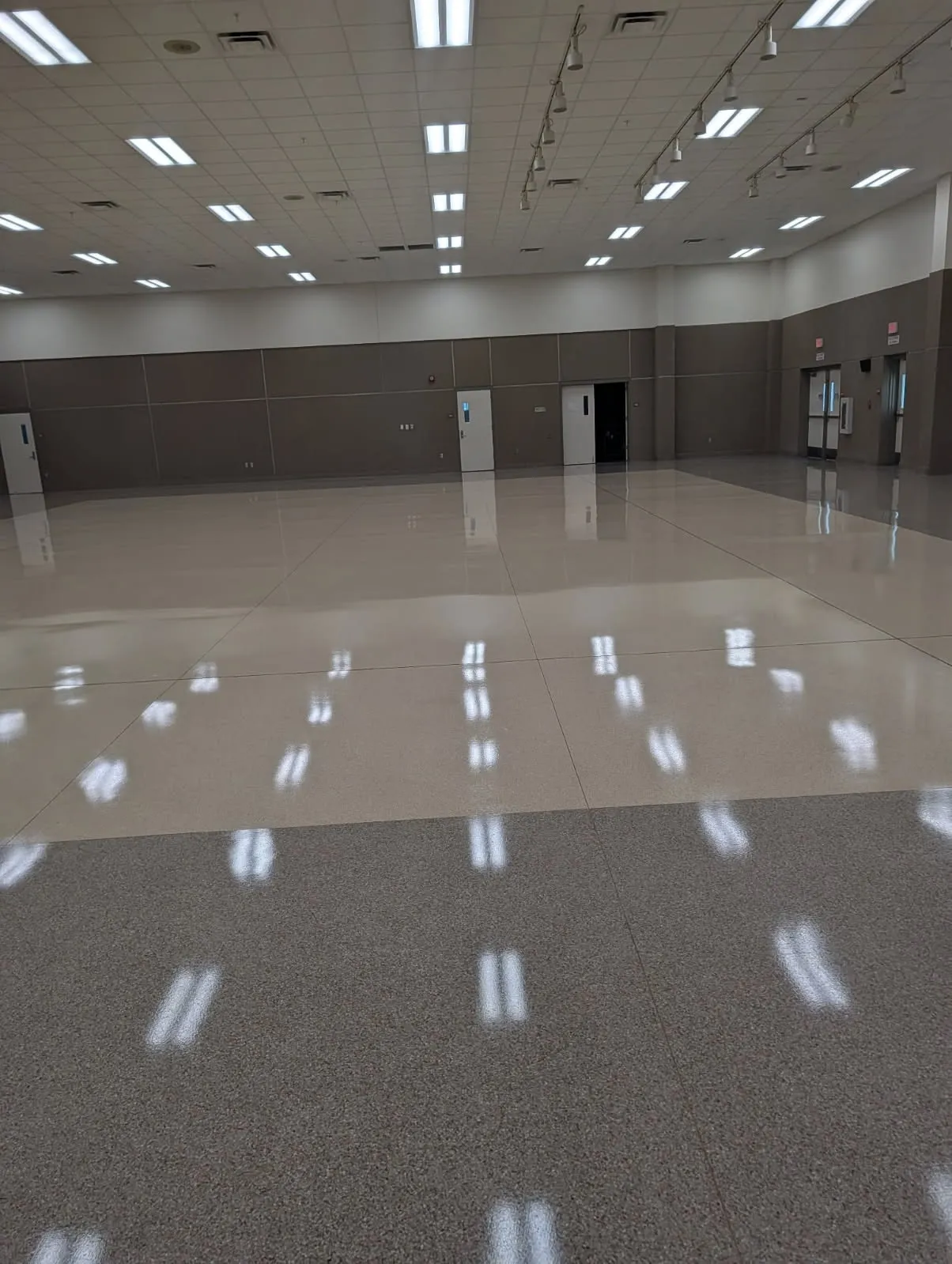
Two-tone terrazzo floor in a large hall after polishing, with an even, reflective finish

Request care for the floor you have

If you are unsure whether the floor is terrazzo, describe it when you contact E2E. If you know you have marble rather than terrazzo, see our marble floor care page. Our residential floor-care overview can help you find information about other materials.

Tell us where the wear is most noticeable and which marks concern you. We can discuss the appropriate scope during a walkthrough.