

Granite floor polishing
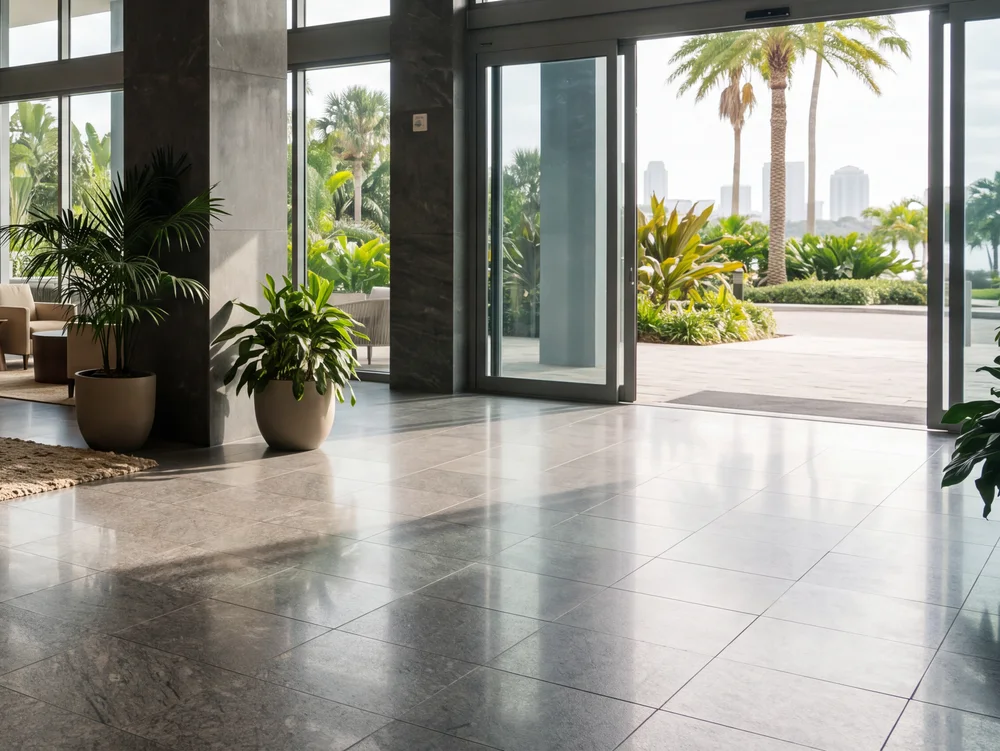
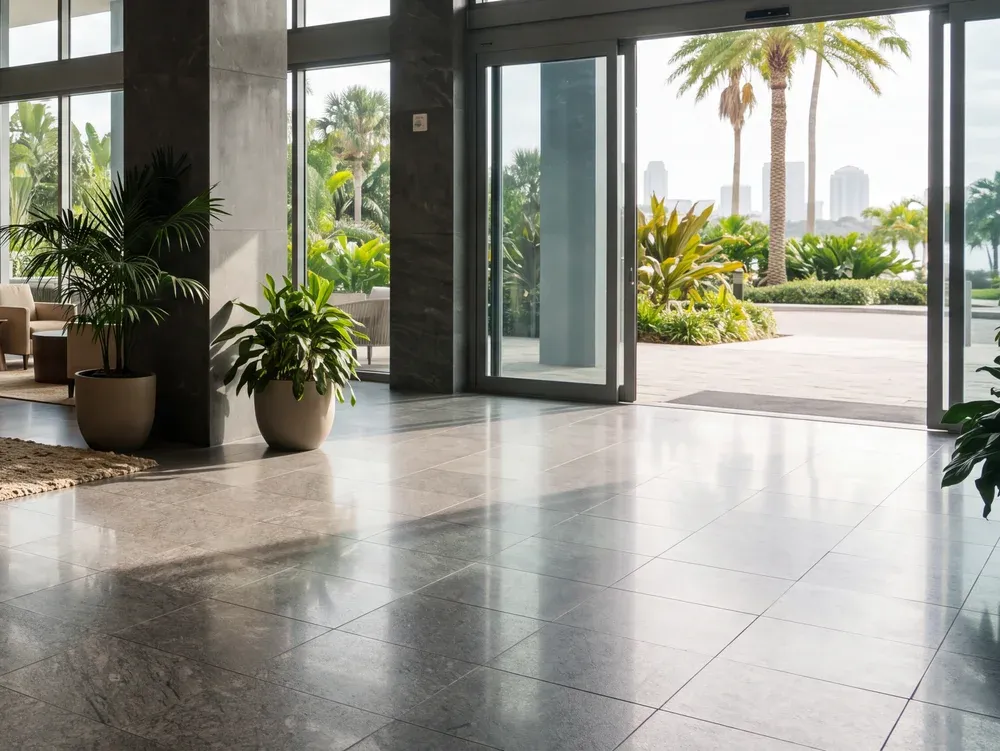
E2E polishes residential granite floors to improve a worn reflective finish. When the floor's reflection looks uneven along a hallway or across a room, polishing focuses on the surface appearance you want to recover. We agree the intended result with you before the work begins.
Request a walkthrough to discuss the floor's existing finish and the areas where its reflection has changed.
Request a walkthrough
“The kitchen floor looks dull” is a useful starting point.
Request sent
Thank you. We'll contact you to set up a time to walk the floor together.
MADE IN TAMPA
Part of E2E Cleaning Services, a Tampa company


Focus on the finish you see every day
Light from a window can make a worn route easier to see than it is under overhead lighting. Tell us where you notice the change and whether it affects one area or carries through adjoining rooms. That helps define a sensible work boundary instead of treating a visible patch in isolation.
Polishing develops a more reflective finish on suitable stone. It is different from cleaning away a film, and it does not mean applying a shine treatment intended for another surface. If cleaning is the appropriate answer to the dull appearance, the scope should reflect that.
For the wider range of care decisions, visit granite floor care. This page focuses on the homeowner whose main goal is a better reflective finish.
Granite is a name, not a complete specification
Stone sold as granite includes different geological materials. Its mineral composition, existing treatments and current condition matter more to treatment selection than the commercial name alone. Two floors described as granite need not respond in the same way.
We look at the installed floor and discuss its finish history. A previous treatment can affect what you see now, so tell us about work or maintenance changes you know about. You do not need to identify the minerals or remember a product name before making an inquiry.
What polishing will address
The walkthrough distinguishes residue from wear and scratches, then considers whether the requested reflection suits the actual stone. We agree the areas to be worked and the expected appearance. We assess the finish options for your actual stone.
Deep scratches, chips and absorbed discoloration require separate consideration; polishing does not promise to erase them. Several overlapping concerns may call for granite floor restoration rather than a finish-focused scope. Cleaning chemistry also needs to suit the actual material, rather than a blanket rule for everything sold as granite.
Sealing is separate from shine. Some granite floors do not require it. Where an appropriate sealer is useful, its purpose is stain resistance, not creating the polished appearance or repairing damage.
Our process
From the first walkthrough to signoff
We discuss your preferred appearance during the initial walkthrough and agree the scope before work starts. Include room connections and any areas you want left unchanged in that discussion. Clear boundaries make the completed work easier to review.
At the completion walkthrough, we review the agreed work with you for customer signoff. We address issues identified within that scope before considering the job complete. Use our contact page to tell us which rooms need attention and what you notice about the finish.
Questions about granite floor polishing
Do I need to know which granite I have?
No. Share any stone records or previous treatment information you have, but an unknown variety is not a reason to delay the inquiry. We assess the installed floor.
Is sealing included whenever a floor is polished?
It is a separate scope decision based on actual need and existing treatments. Sealer is not a substitute for polishing, and the stone's name does not establish a sealing requirement.
Request a walkthrough to discuss polishing your granite floor.