


Granite floor restoration
E2E restores residential granite floors with work scoped around their condition and the result you want. If a floor has uneven wear alongside scratches, marks or areas affected by earlier treatments, restoration brings those concerns into one plan. The goal is to address the floor's needs rather than prescribe more shine everywhere.
Request a walkthrough to show us what has changed and discuss the areas you want restored.
Request a walkthrough
“The kitchen floor looks dull” is a useful starting point.
Request sent
Thank you. We'll contact you to set up a time to walk the floor together.
MADE IN TAMPA
Part of E2E Cleaning Services, a Tampa company


Plan around the condition of the whole area
A room can have more than one surface problem. Residue may obscure part of the finish, a walking route may show wear, and a separate mark may be discoloration within the stone. Those concerns need to be distinguished before agreeing the work.
Restoration is an assessed corrective scope. Cleaning may address residue, suitable refinishing may address surface wear, and physical defects need their own evaluation. The work is not a fixed package of every available service. If reflection is the main concern and the rest of the floor is suitable, granite floor polishing provides a more focused route.
We consider how affected areas meet the surrounding floor. Discussing adjoining rooms and less-worn sections helps set the boundaries of the proposed work, especially where a small area is much more noticeable than the rest.
Start with the actual stone and its history
Commercial granite names cover different geological materials. Mineral composition affects how a floor responds to treatment, so the label alone cannot specify suitable chemistry or the finish it will accept. Prior treatments matter too.
Tell us about earlier floor work, any change in maintenance and when you first noticed the problem. Stone records or older photographs can help explain the history, but they are not required to start the conversation. Our granite floor care overview explains how restoration sits alongside other care options.
Keeping an existing appearance can be the right goal. Restoration does not have to mean choosing the highest reflection or changing the character of the floor.
Agree the result and the limits together
During assessment, we distinguish surface scratches and chips from features such as fissures or cracks that warrant further examination. Appearance work does not establish structural stability or correct an underlying cause of movement. Deep damage and absorbed stains can remain visible, so the agreed scope needs realistic appearance expectations.
Before work begins, we agree on a suitable finish for the stone and discuss how the treated areas will relate to the surrounding floor.
Sealing is another separate decision. Some varieties do not need it. An appropriate sealer improves stain resistance where needed, but it does not repair defects or provide the restored finish.
Our process
Review the work before completion
The initial walkthrough establishes the concerns, desired appearance and agreed work boundaries. Show us areas you want preserved as well as those you want improved. You can describe these through our contact page in ordinary words.
Once the work is ready for review, we walk through it with you and obtain customer signoff. We address issues identified within the agreed scope before considering the job complete.
Questions about granite floor restoration
Can we discuss one damaged area rather than every room?
Yes. Show us the affected area and its surroundings. We discuss a suitable scope and how the proposed work relates to the adjacent finish.
What should I include in my inquiry?
Name the rooms, describe the visible concerns and tell us what you want to keep or change. Include any known treatment history. You do not need to select a restoration method yourself.
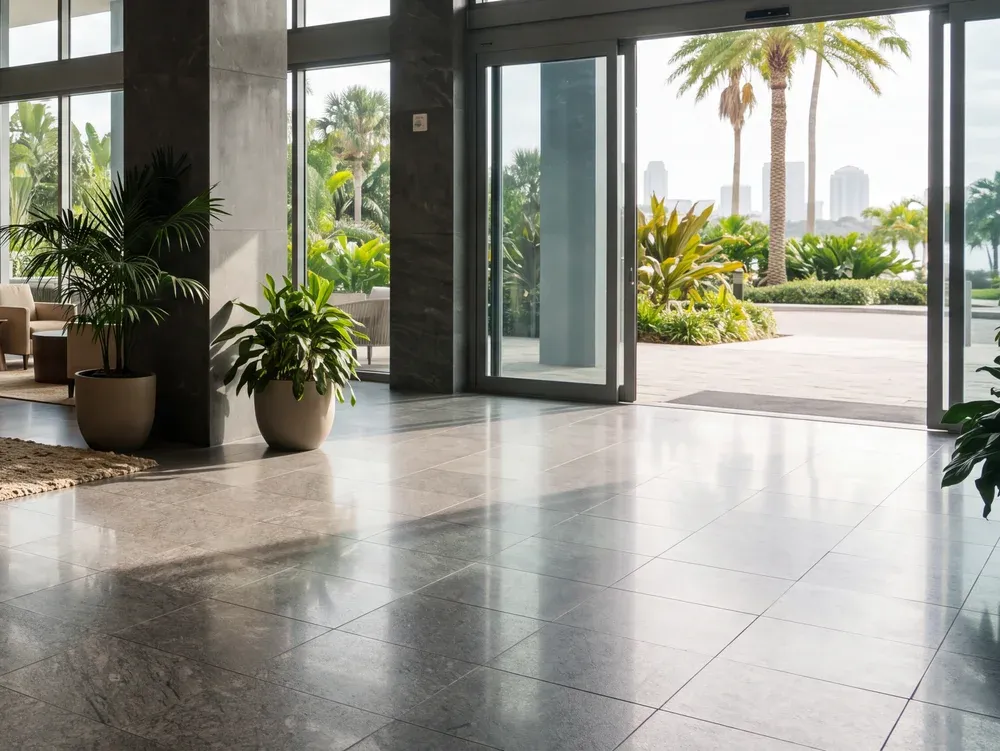
Request a walkthrough to plan restoration around your granite floor's condition.