

Travertine floor polishing
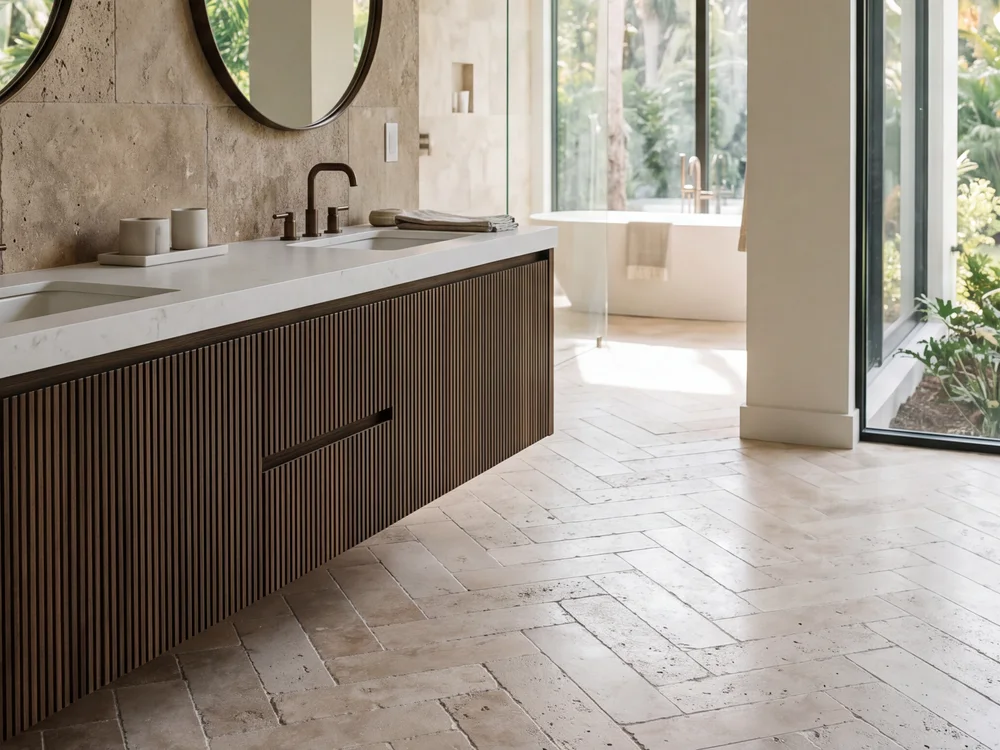
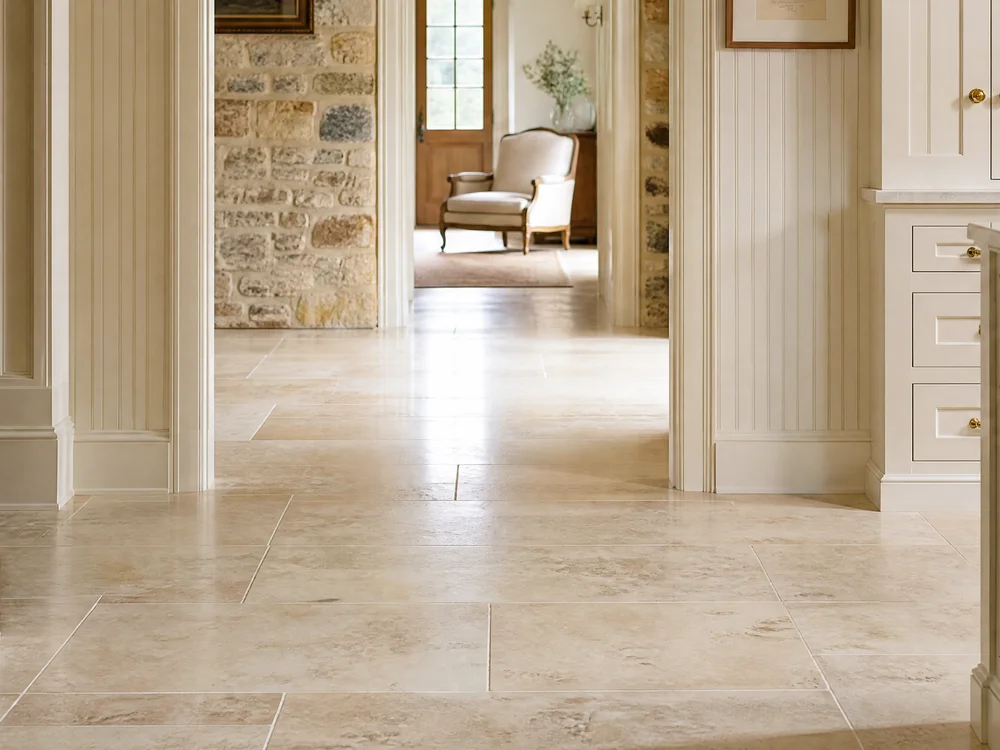
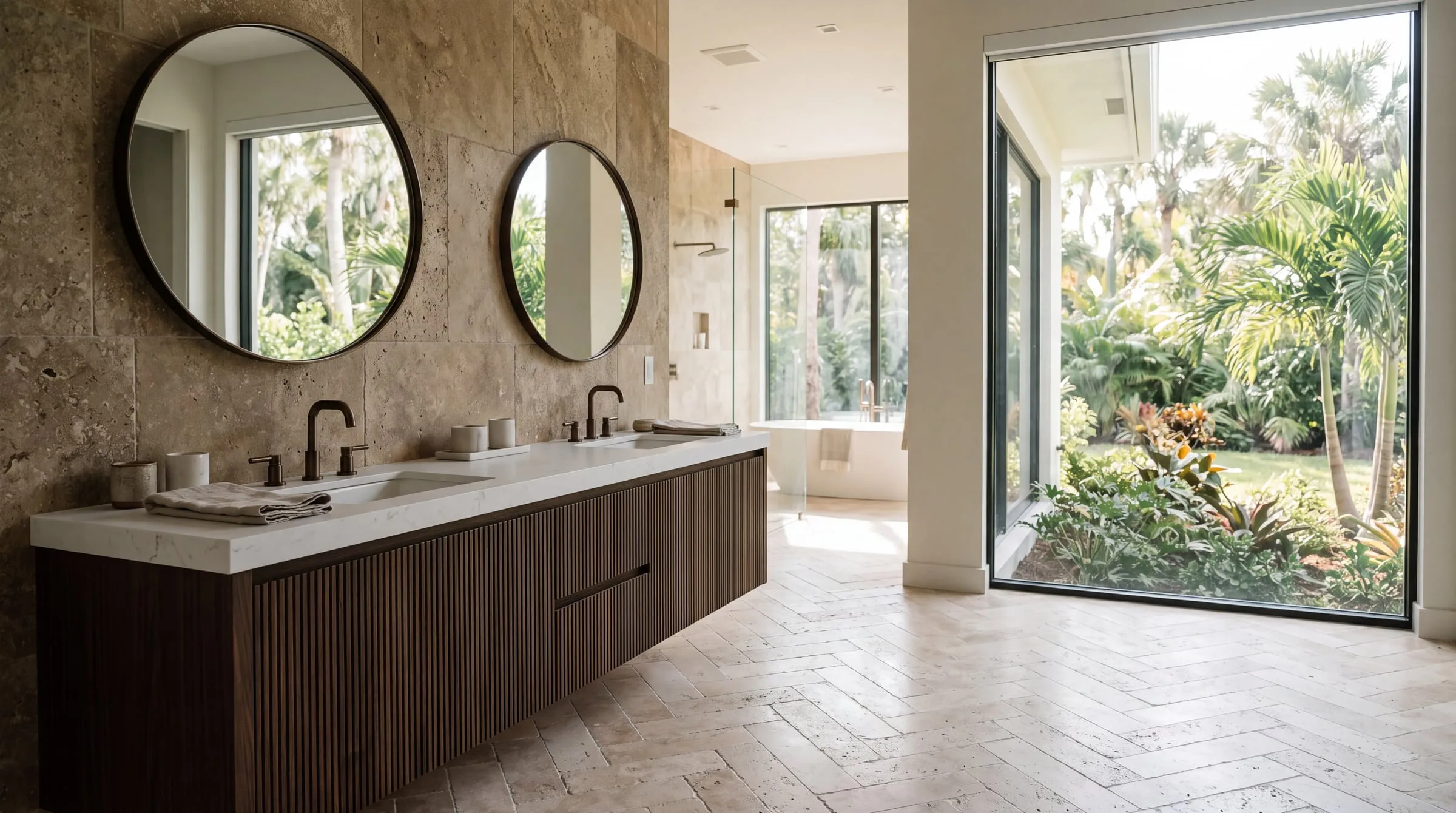
E2E polishes residential travertine floors to improve a worn or uneven reflective finish. If the floor looks dull beside windows or loses its sheen along walking routes, we help you choose an appropriate finish for the stone and the room. A softer, lower-reflection appearance belongs in that conversation too.
Request a walkthrough to show us the areas that bother you and discuss how you want the floor to look.
Request a walkthrough
“The kitchen floor looks dull” is a useful starting point.
Request sent
Thank you. We'll contact you to set up a time to walk the floor together.
MADE IN TAMPA
Part of E2E Cleaning Services, a Tampa company


Choose the reflection you want to live with
Polishing develops a more reflective surface on suitable travertine. The aim is an agreed finish across the scoped area, rather than making one conspicuous patch shinier than everything around it. Looking at the floor in the room's usual light helps explain what you notice and what you want changed.
Honing is a refinishing option associated with a smooth, lower-reflection appearance. It can be a better direction for a homeowner who prefers less reflected light. Honed does not describe one standard sheen, so describe the appearance you prefer instead of relying on a finish label alone.
You do not have to choose between these terms before contacting us. Our broader travertine floor care page explains how finish work relates to other care needs.
Openings and texture are separate from shine
Travertine has natural voids. Some floors have filled openings; others retain an unfilled appearance. Those descriptions concern the openings, not how much light the surface reflects. A filled floor is not automatically polished, and choosing less reflection does not automatically mean choosing an open texture.
At the walkthrough, point out any openings that look different from the surrounding floor or seem to have changed. We discuss the texture you want to preserve separately from the sheen. Existing fill and the condition around it also matter when agreeing the finish scope.
What the finish assessment needs to settle
Dullness can come from residue, surface wear or acid etching. Cleaning addresses soil and residue; refinishing addresses suitable surface damage. Travertine is acid-sensitive, so a pale spill mark may be an etch rather than a stain. These differences guide the work rather than a standard polishing package.
The stone, existing texture and fill affect the achievable appearance. Polishing is not a promise to erase deep damage or discoloration, and a change of finish needs its own suitability assessment. Where several condition problems overlap, travertine floor restoration is the more useful starting point.
Sealing is a separate decision. Suitable travertine floor sealing can improve stain resistance where needed, but it does not create the polish, fill openings or prevent acid etching.
Our process
Agree the work and review the result
We use the initial walkthrough to identify the rooms and boundaries of the work, discuss the desired appearance and agree the scope. Tell us about previous treatments and any areas you want left unchanged.
At completion, we walk through the agreed work with you for customer signoff. We address issues identified within that scope before considering the job complete. Use the contact page to describe your floor and the result you have in mind.
Questions about travertine polishing
Can I ask for less shine?
Yes. Ask about a suitable honed or lower-reflection finish during the walkthrough. Bring a reference image if it helps explain your preference; the actual floor determines what is appropriate.
Does polishing mean filling every opening?
No. We discuss openings and existing fill separately. Preserving an unfilled texture or assessing a changed area is a scope decision, not an automatic part of polishing.
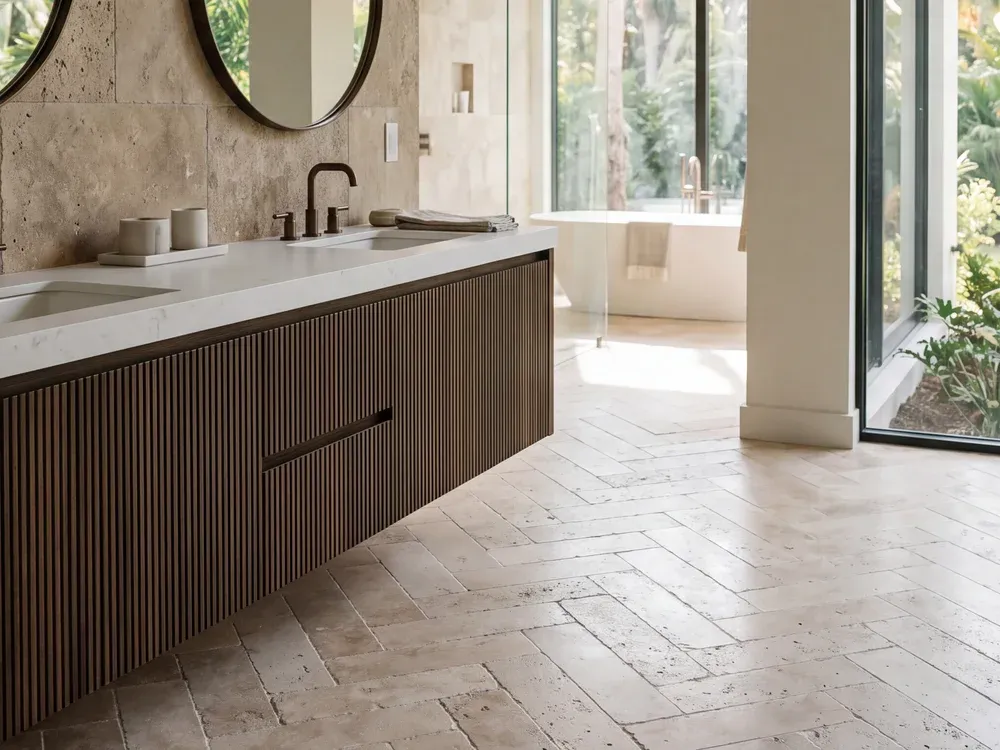
Request a walkthrough to plan the finish for your travertine floor.