



Travertine floor restoration
E2E restores residential travertine floors when worn areas, marks and changes around the stone's openings need attention together. Restoration brings those concerns into one agreed scope, with the intended texture and finish guiding the work. It is a broader condition-led service than a request for more shine.
Request a walkthrough if different parts of your floor seem to need different kinds of care.
Request a walkthrough
“The kitchen floor looks dull” is a useful starting point.
Request sent
Thank you. We'll contact you to set up a time to walk the floor together.
MADE IN TAMPA
Part of E2E Cleaning Services, a Tampa company


Make sense of a floor with mixed wear
A walking route can look flat beside a less-used part of the room. Elsewhere, a spill mark or an area of changed fill can draw your eye for a different reason. Calling all of it dullness hides useful distinctions.
Restoration starts by separating the concerns. Soil and residue call for a different response from wear or acid etching, which damages travertine's surface. Discoloration may involve absorbed staining. Knowing which issue belongs where helps define the work and avoids asking polishing to solve every visible problem.
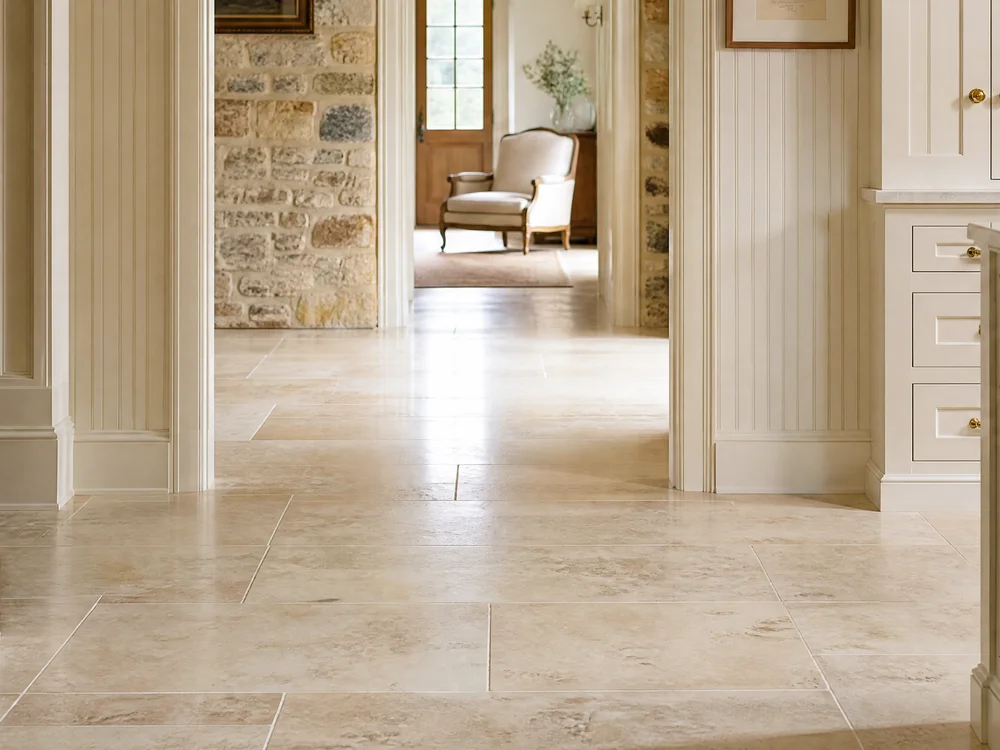
The travertine floor care overview covers the material's care options. This service is for homeowners who need to bring several condition and appearance decisions together.
Preserve the texture you chose
Natural openings are part of travertine. An intentionally unfilled floor has a different character from a filled floor with newly exposed voids or damaged fill. The presence of a hole alone does not tell us that it needs correction.
We discuss which openings belong to the appearance you want and which areas have changed. Any proposed attention to voids or existing fill belongs in the agreed scope. Restoration does not automatically include filling every opening or changing an unfilled floor into a filled one.
Sheen is a separate choice. A smoother-looking reflection does not define whether travertine is filled or unfilled. If the condition is otherwise suitable and your main concern is reflection, see travertine floor polishing, which also explains suitable lower-reflection honing options.
Set useful expectations before work begins
The assessment considers the stone's current condition, prior treatments and the finish you want to retain or discuss changing. Deep damage, staining and old fill can affect the result. Refinishing is not a promise that every mark disappears, and appearance work does not establish that an underlying movement problem has been corrected.
We agree what the work will address and what will remain outside it. There is no automatic sequence that every travertine floor needs. Sealing is considered separately according to the floor's needs; suitable travertine floor sealing improves stain resistance rather than repairing the surface or protecting it against acid etching.
Our process
A scope you can review at completion
During the initial walkthrough, show us the affected rooms and the areas you want preserved. Tell us what has changed and any treatment history you know. We use that conversation and the floor's condition to agree the work boundaries and intended result.
We review the completed work with you in a completion walkthrough and obtain customer signoff. Issues identified within the agreed scope are addressed before we consider the job complete. You can describe the floor through our contact page without diagnosing it first.
Questions about travertine restoration
Do I need restoration if only one area looks worn?
A localized concern may need a narrower scope. Point it out along with the surrounding floor so we can discuss the boundary and appearance of the proposed work.
Should I choose a finish before the walkthrough?
A preference helps, but you do not need technical terms. Tell us whether you like the current texture and reflection, and which parts you want improved.

Request a walkthrough to discuss your travertine floor's condition and restoration scope.